
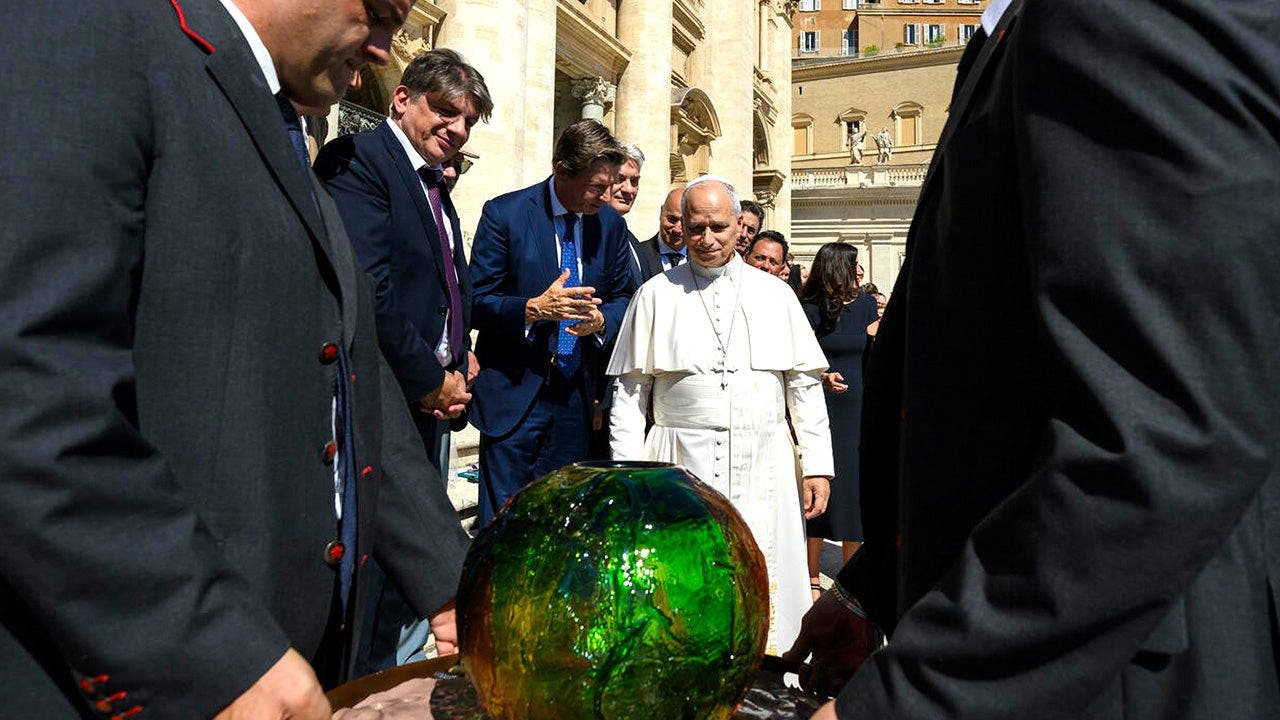
Pope Leo XIV received a unique piece of artwork, known as the "Sphere of Humanity," during his General Audience in early September. The sculpture, made of Murano glass, incorporates handwritten passages from his first encyclical, Magnifica Humanitas, which reflect on human dignity, vulnerability, solidarity, conscience, and the challenges posed by artificial intelligence.
The presentation was made by the charity Saint Peter for Humanity, which is pushing to "protect human dignity" and establish "what should stay human in the age of AI." The charity's president and chairman, Olivier Francois, stated that they recognize the benefits of AI, but believe that humanity must be involved in the conversation. Francois explained that the charity's initiative, the Codex Humanitatis, aims to define what being human means and what should stay human in the age of AI.
The Codex Humanitatis will be developed by 70 leaders gathered in New York City next week, including Nobel laureates, artists, thinkers, philanthropists, technology, and AI experts. The initiative will focus on issues such as the future of work, accountability, information integrity, human oversight, and the protection of children and families.
The "Sphere of Humanity" is based on an original design by Italian architect and designer Gae Aulenti, and contains four handwritten passages from Pope Leo XIV's Magnifica Humanitas. The passages highlight the importance of safeguarding human dignity and promoting justice and fraternity in the face of technological advancements.
Saint Peter for Humanity plans to engage governments, companies, and institutions in translating the principles of the Codex Humanitatis into practice, including through engagement at the World Economic Forum Annual Meeting in Davos.
NTC Report coverage is based on reporting from the original publisher.
View original reporting →